Powered by WebRing®.

Saturday, February 6, 2010

January 2010

Matt grabbed his cell phone from my hand.

"God, Kerry!"

I was supposed to have called Matt's work number and extension. He was testing his voice-over-internet phone to see if the pop-up box would appear on the computer screen as it should when he received an incoming call, the one I was supposed to have made.

"Matt," I spoke slowly, hoping to dilute his impatience, " I am not trying to aggravate you. You know, in the past couple of weeks, I have stopped to get gas, gone into the station to pay, come out, and driven away. A few miles later, I happen to look at the dashboard and notice I didn't pump any gas. I don't know how to explain that."

Matt pretended not to hear. He is not a man without sympathy, but it was not helping him to know I was a numbskull away from work, too. I had explained nothing. I was making him crazy, and he just wanted it to stop. I left his office without another word.

Working for Matt had been a joy up to a few weeks ago.

With the new year, several doors in my corridor of life slammed shut. Whether a result of winter's usual contraction and abbreviation, life reduced to the merest symbols of itself, or whether I and billions of other people on the planet, by whichever ancient design one may choose, are really facing the Apocalypse on personal and macrocosmic levels, I was left with a sense of foreboding of further damage to the delicate tendrils I was pushing out toward a possible spring. I am not sure now it will come, this year or any other.

There were hints of news that no one would like back in November, but I was keeping my chin up with Christmas ahead. We pretend during the Christmas season, which is unique in the way it stops time. We are all again in a wonderland of hope and promise that abides right up to the 25th, and then we are glad it is over and not sure what all the fuss was about as we continue to find pine needles, tinsel, and ornament hooks all over the house for weeks after. One day, almost suddenly, we realize the gloom and emptiness of January has entered the heart.

As I learned exactly the day after Christmas, my favorite web site where I communed with others who were, or had been, homeless, and what had been a consolation in weary evenings alone, was destroyed by a progress of incautious behavior and unseemly events in the lives of the moderator and his girlfriend. She was discovered by twists and turns to be the paramour in a drama that led her to Scotland and the very doorstep of the mother of his new child. Her personal tragedy, while it did not bring an empire down, meant we were all thrown from the hearth to the outer darkness once again, our stories of how homelessness happened to us and our attempt to communicate it, broken and scattered. Thankfully, a few friendships engendered by the web site had been preserved through private email. Otherwise, nothing was left.

Then my carburated truck, so unhappy in the rain as it sputters and chokes its way to a start as if it were drowning, gave out near the end of last week's deluge. It was towed to the middle-eastern garage and given a new battery. Raised from the dead once again, the truck wheezed and backfired to a complete stop on the freeway ramp a few days later. It was out of gas. The following day, it would not start at all when I returned to the parking garage laden with bags of grocery. Towed again, my poor truck would not be returned to me for an entire week. I had broken the gear box in the steering column, and every junk yard in the area had to be scoured for parts.

Obviously, part of the problem with the truck, besides its age, is me. The gas gauge is inaccurate, and I know I take a risk each time I allow it to fall below a quarter of a tank. I take my frustrations out on the truck regularly, too, by slamming it in and out of Park, hence, the most recent expensive repair. The other slice of the problem is just bad luck. Otherwise, how does one account for the tow-truck driver putting the key in the ignition and pulling it out with the entire starter cylinder attached? I wonder why the wheels, out of shame, do not just fall off and roll away.

The cost of the repair rocketed my running tab with the garage to a thousand dollars; and after a week in a hotel room, eating out every day, and taxi rides to work, I was in trouble again with Bank of America, a representative of which said I was fortunate to have received only four service fees for my overdrawn account as her bank had so generously decided not to charge anyone beyond that number. Of course, all those fees meant that my next automatically-deposited payroll check would be gone --- eaten up by bank rapine --- and that I would incur still more fees attempting to live on too little money. There was no end to the plunder in sight.

All the while, there were moments when the truck's repair seemed unlikely. They had found a steering column, but for a standard shift. Another search produced the proper one for an automatic transmission, but pieces had been broken off in the process of removing it from the wrecking yard. That part, for fear another one could not be located, was held back for repair. A close call. Real close.

I had not thought much about what I would do if the truck were ever discovered to be beyond repair. I have not afforded myself the luxury of such thinking, as being without both my vehicle and current home, as it were, would seem quite outside my capacity to cope. And it nearly was. I was distracted by thoughts of what I would do and where I would go, whether I could continue working if I had to bus, first, to all manner of social service agency to find a place to live. I have tried with difficulty to imagine living in a shelter and working a normal week. Typically, I would be downtown where most shelters are located and have to take both buses and trains and make as many as three changes one way to get to work and back.

Try as I might to amuse myself with television at the hotel, the vision of absolute final ruin never left me. It could be the end this time. I tried to pray, but that eluded me as I could not concentrate well enough to do it. I only slept part of the night, awoke with headaches, and had episodes of nausea throughout the day at work. I was in a sleepwalker's trance by the end of the week when Matt enlisted my help in his office.

In the week before the rainstorm, a woman who had become a friend at work left the company, followed by a young women whom I liked very much who quit in protest, and a manager who was fired for stealing credit card numbers. Being at work now was lonely and uncertain, and there were nasty rumors in the air. But I was bearing up; I had to. Holding a job gave me a paycheck and something to do besides dwell on the grief-stricken past. Fortunately, I doubt I could lose my job short of applying an Uzi to the place since I would have to trump the gangstas, ghetto girls, and welfare moms with their wide array of work habits so poor and glaring you would walk away convinced your dog could be Employee of the Month.

To be honest, though, things have cleaned up quite a bit from the time I first began employment with Matt, and I should admit I wanted this job knowing I would not be vexed by a strict dress code or stymied by an expectation of sociality with people of my own age and experience. After all, I was getting dressed in the morning without the aid of a mirror and doing make-up with a small mirror but not enough light. I could wear torn and ill-fitting clothes. I could wear the same thing every day. I could miss a hair washing. To wit, I could be poor among the poor, and no one would care what my truck looked like.

The best thing about January 2010 was it ended.

Sunday, December 6, 2009

My Friend, Bob

Bob is a regular guy who probably had little more to say to a wife than "What's for dinner?" I don't hold that against Bob. I am only trying to say that he is free of pretense, easy-going, able to laugh at nothing, and very likable for these reasons. I admit it: I like Bob, and I do not take to homeless men generally.

Bob says his father was a cop-killer. His father claimed to have come from the belly of a snake. He knew he was a bad man, accepted it, and bragged about it and the number of cops he murdered. Bob has never killed anyone, even though he has been in a few scrapes. His father frightened him, and I remember imagining Bob as a child clinging to his mother, using her as a shield. Bob is proud, nonetheless, of his father's reputation, audacity, and arrogance. His father probably died by the gun, but Bob never got around to telling that part.

Bob drinks. He likes to drink and drinks constantly. He told me he was never going to stop drinking. Apparently, if he does not drink himself to sleep, he cannot stop thinking about his three ex-wives. He had woman problems, but I never learned how those were different from the problems other men have.

Bob used to work, too. He had worked steadily as a younger man at various types of jobs, but drinking probably got in the way as it did with the wives. By the time I met Bob, he was a confirmed alcoholic and homeless. He had already been homeless on the Bay for five years.

Before that, I did not venture to ask: Bob does not talk in a straight line; his train of thought derails here and there. Before long, he is repeating himself about what he thinks is wrong with my truck and why I need a choke installed even though I tell him the truck is fine. So talking to Bob can be tiring, and he just won't stop unless I beg out a few times over and over again that I have something else to do or must get to sleep.

Bob would walk away from my truck, still talking, only now talking to himself. He would often continue in this way into the night, talking to the Bay, to whoever was out there listening. Tired of that, too, I would roll my truck window down and ask politely, "Bob, are you talking to yourself?"

"Yeah," Bob drawled, stretching the word out as though it were a matter of fate and there were nothing he could do about it. "I'm going to bed soon." And he would. He would climb into the back of his truck.

If you recall, I was saddened in March to learn that Bob was ill. He had been diagnosed with cancer and hepatitis. He was on a stolen bicycle because his truck had been confiscated, and he was sleeping on the ground near the Long's Drugstore. That is where my story, Daffodils, ends.

Bob disappeared soon after.

Sensing something wrong after days and weeks went by without Bob, I drove the streets and allies around the drugstore. I phoned the nearest police department to ask if they might have picked up someone of Bob's description. I spoke to any policeman parked in the area in case he might have seen Bob and to every homeless person in the vicinity; but I was losing hope and feeling that much more helpless the more people of whom I inquired.

I felt guilty and selfish, too, that I could not manage to turn up any information and that I did not have the time or resources to do a full search, either by phone or in my truck. Maybe I was just rationalizing the reality that I have to work for money to feed myself, to pay off debts, and to save for a place to live. Maybe I was made selfish by the conditions of homelessness, or maybe the selfishness came first and lay at the root of my homelessness.

Self-doubt can be vicious.

In a pinch, in a bind of my own conscience, for want of other means, I did what other helpless, hopeless, guilty, and selfish people do: I prayed. It was desperate prayer, perhaps the only honest kind. I imagined Bob being taken in by some philanthropic type who was impressed with his good nature and could afford to handle his bad habits. I imagined Bob in a hospital getting the attention he needed by a caring staff. And, I imagined Bob getting to Las Vegas for the last sexual exploit of his life. (Bob once told me his fantasy of having a number of prostitutes sit on him since he no longer had the energy otherwise.) I could not, though, imagine Bob dead. Whether that were my intuition or merely the result of bad faith was hard to tell in the eight months that followed Bob's disappearance.

People who knew me inquired about Bob. Everybody knew how well Bob amused me, how kindly I felt toward him, and how much he seemed to trust me. He was the first homeless person to ever speak to me. We had a little homeless relationship going, but I no more knew what to do about Bob gone missing than I did about my dead dog ending up in the City dump. (That was the well-meaning fault of a neighbor who bagged my dog in a hurry so that children walking to school would not see her in the road.) In brief, I would feel guilty all over again and all the other feelings that amounted to severe self-reproach.

I guess I got over Bob. I figured he was dead in the sense that, like my dog, I would never see him again. I actually never saw my dog die. I never saw her dead body. I only heard about it. Sad to say, since I did not expect any report from anyone about Bob's whereabouts or his status dead or alive, he was dead to me for all intents and purposes. I did not love Bob the way I loved my dog, but the world was emptier without him; and, absent of Bob's ameliorating effect, homelessness took on a grimmer aspect.

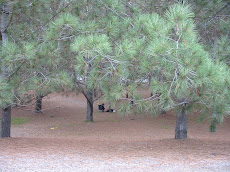
Many more changes later --- from late winter turned to spring, spring to summer, summer to mild California fall, the loss of a job to finding another, having a little money to being flat broke, and so much more of the same old thing --- I was getting out of my truck on a Sunday morning at one of the nearest public washrooms. It was a cool, overcast day, pleasant and quiet without the tourists whose absence left only the dark, damp presence of Monterey pines amid the ghostly morning fog.

Out of the corner of my eye, I noticed someone approaching me. I looked, but I did not see right away and could not, for a moment, put a name on the apparition that finally spoke.

"I didn't come to see you sooner because I thought you'd be mad at me." It was the familiar drawl.

"Bob!" I grabbed his arm and looked him in the face. "What happened to you?"

"Well, I been living in John's truck, and they told me I ought to say hello. I been seeing you out here for a while."

"I looked for you at the Long's drugstore and didn't find you. Are you still living around here?"

"Oh, yeah. I had a stroke. Somebody picked me up and took me to the hospital. I was there for three weeks. When I got out, John let me sleep in his van." Bob spoke so slowly and matter-of-factly one would have thought the incident were far in the distant past. We talked for a while longer; but the day was moving ahead, and I had chores to do before I started another week of work.

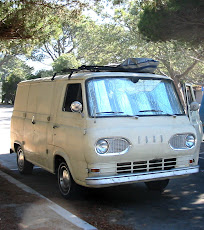
The hole in the scenery of my life out here on the Bay has taken the shape of Bob once again. Bob stops by the truck to chat on occasion; and whenever I see John's van, I know Bob is ensconced in the back: he's safe, drunk, and sleeping.


Saturday, November 21, 2009

The Daily Dance of Going Nowhere

On the other side of expensive vacation rentals, the ocean is an edge of darkness dotted with lights from invisible boats in the distance. Parked at the end of the continent, I am feeling the terrible weight of my stark life. No one can know, really, in all truth, how I got here. It has been worth pondering in therapy, but no answer to the problem is permanent even if I can make it through another week. Week to week. Day to day.

One foot in front of the other, I struggle to endure the daily routines that circumscribe my life; and, to be honest, I am tired and bored of the radius of financial confinement to which I am presently condemned. I seem to be married to it. I am heartsick at the way money has grown to a staggering importance for me, overtaking everything else, but mostly and rudely the things I love. I have lost my focus for poetry, for long afternoons at the beach, for planning anything beyond the next few hours.

Yet, oddly, and to my own amazement, I would not trade my present circumstance for any other reality. I am not even tempted to find a shortcut or detour. For one thing, I'd be suspicious if things got too much easier too fast. For another, I am proud and competitive and want to see this weird life-warp out to the end: I want the victory over the odds as much as I want a ward against this kind of warp ever happening again.

Yet, I admit I wonder if I have not found a modus vivendi, a make-peace, passive compliance, with the warp rather than the path to defeating it. For all my more-than-occasional desire to run --- run anywhere to get out of here (and one could well ask where here is exactly) --- I cannot seem to find any reasonable alternative to the daily dance of seemingly going nowhere. And run? Run backward into a past that no longer exists?

I do enjoy imagining a prize at the end, if there should ever be an end; but I often doubt these feeble attempts at hope. Hope is tricky. Hope, even a little of it, can plunge one into deeper despair. Like salt or sugar, it is best to go light on it, walk gingerly, but just keep going. I hope, but I am not bragging I have any. I'm not running like a child with scissors. I'm keeping my head down.

I imagine a lot of things. My imagination, though, is much richer than what the world seems to have available. I wanted some good gypsy company out here and hoped for it ---- a gal friend with whom to chat over a beach fire, roast marshmallows, share some silence. I have wanted to record her life --- their lives, for my imagination gave me several women friends with whom to share the coming cold evenings. I thought I might write about these women, hoot about their courage. their intelligence, their strength in pulling themselves through difficult times. They probably don't exist. At least, not the way I imagine them.

For instance, there is a curious gal who lives in a truck about as ugly as mine. She spends most of the day on the Bay in one particular spot, though I could not say where she goes to park and sleep in the evening. I see her very early in the morning as I am washing and dressing for work and if I visit the outdoor washroom in her area before dark.

She seemed friendly at first. I often saw her chatting with people who brought their dogs out for a walk or with someone from the Parks and Recreation crew. However, when I tried to chat with her some time ago, I was politely rebuffed. I was offering food. She said she was on a special diet.

I was unsure how to extent myself to her, and I made a patent mistake. The truth is (and I knew this) the homeless are individuals with a keen sense of dignity: no one wants her state of homelessness pointed out to her, not even obliquely through the offer of food. We hide homelessness from ourselves so that we can do that impossible dance every day. We settle for a lack of definition, a myopic haze that takes some of the sharp edges off, and just plain guessing as to who or what someone once was or did. That is certainly more fun, and that, of course, is the wrong word.

No one talks much to each other out here, which should not come as a surprise. There is too much of a chance of tripping over a live wire of dense feelings that have not been examined or were given up on as yielding nothing but pain if unraveled. We are careful, in other words. There are land mines, you see.

The other homeless, truck-driving lady and I tend to meet coming and going from the public washroom. One day a week ago, she asked if I knew who was taking all the toilet paper off the rolls, a daunting feat, really, when you consider how long it must take to swipe the paper from 12 rolls without leaving a trace, save the cardboard shells they came on. I know we both wonder how the thief is going unnoticed, by what means the toilet paper is being displaced, and how it is being transported from the washroom.

It's the aggravation of being surprised, the grim idea of having to trot back to one's vehicle for tissue or paper napkins to fill the lack, and the curse-laden relief of finding that the thief conscientiously left one roll with enough paper on it in the last stall. It is an ill-timed, five-second emotional roller coaster that no one would enjoy in the early morning, least of all the homeless who have to trek the great outdoors to get to the nearest toilet. It is one of those relatively-small things, like the housed who drop trash in the park or play their radios too loudly, that unite the homeless.

A few days ago in the washroom, this same woman wanted to know if she could ask a personal question. I should have said, "No." I am not that clear headed in the morning, and I was caught off guard. After all, I was dressing, and I will probably never get used to having company in my outdoor boudoir.

"Do you actually shower out here? I mean, do you take cold showers?"

It was all downward from there. I was only half-dressed and felt defensive about something that is really no one else's business. But I am polite by nature and tend to deal honestly with others. I answered the questions: Yes. Didn't I know I could use the Y for only $30 a month? And, oh, she hates being cold. She could never take cold showers. I must run warm. I must have a high metabolism. Blah blah blah. Blah blah blah.

All that at around 6 a.m. My first draught of tea would be a half-hour and two miles away.

Her ignorance was deeply frustrating, even hurtful, as it bumped noisily against my fantasized gypsy girlfriends who would have known the secrets of the open-air shower: the exquisite sensation of cold water warming one's insides; the canopy of pines and palms filled with the sweet susurrus of birds; the high, star-studded, velvet sky overhead; and a privacy otherwise denied the homeless and about which the housed know nothing.

I cannot explain her--- the other truck-driving, homeless lady --- except to guess that she wanted to pretend she had choices and perks of which I might not have been aware. We might as well have been talking over our coffee cups at the fence between our backyards replete with laundry waving in the breeze, immaculate green lawns husbanded by men, and swing sets empty of children in school. There was always a standard histrionic quality to the middle-class housewife and her ability to spend, albeit wisely. That image of the other truck lady and myself persisted through the day, and it was a comfort of sorts, though another kind of fantasy that is far out of reach, existing as it does in another era.

Perhaps her fall from the grace of the middle class had been much harder than mine. It takes considerable time to embrace the notion that one has become part of that class against which the armies of the world protect the wealthy.

In any case, in my position, one can only do what comes to hand. I have a job. I have a vehicle. I amuse myself with crossword puzzles and New Yorker magazines I lift from the YMCA after yoga class. I write. I run in expensive shoes that were worth every hard-earned dollar I paid for them. I make friends.

Friends. They are of considerably more value than money alone. I am sitting now with my laptop aboard a sailboat that sways gently in its slip, lulling me as I pursue the educated idleness to which I am accustomed. The sound of a grand harp makes me curious enough to go topside to view well-dressed people gathering for a wedding about to take place on the grounds next to the marina. I return to the cabin on loan to me, the jazz music playing on the radio, and the appurtenances of the temporary world I have managed to eke out for myself, an accomplishment of the bare truth.

My truck stopped running in the middle of the freeway a few days ago, which means my world had come to an end once again. I had just received my new Triple-A card and had not yet paid the renewal fee, but I phoned anyway. The Highway Patrol pushed me off to the side of the road, and Triple A's truck showed up within the half-hour to tow me to the middle-eastern garage. That slow, sinking feeling of doom around not having a place to sleep for a night, a few days, a week, or worse began to swallow me. And what if the truck were, this time, beyond repair?

Despite having working solidly for six months at a new job, I had only a ten-dollar bill to get me to the end of week when I would get the first decent paycheck of my career there. That workplace deserves a few pages of its own, but suffice it to say that a vehicle breakdown at this time, while inevitable with an old truck, was nothing but bad luck after bad.

The cell phone, the necessity of which I have exhorted many times, was the one piece of good luck I had in hand. I phoned everyone in the area whom I thought might be able to help. I happened to reach a friendly couple whom I had met in yoga class who lived near my YMCA. I humbly stated my need, and they were more than willing to open their door to me.

Within the hour, I had a ride from the middle-eastern garage to the home of the most upbeat, offbeat, intellectual, and artistic couple I have had the pleasure of knowing in a very long time. Their simple, tastefully-remodeled beach house was filled with exotic sculpture Pattie had created and was a delight to my eyes. Bill, a former university professor and a keen, sensitive observer of human beings, had himself experienced homelessness. He seemed to know intuitively what I felt and what was needed. I was offered dinner, of course, but I was also offered a place to sleep and Bill would take me to work the next day. I could stay there at the house. Or on the boat.

The idea of sleeping on a boat was just too outre to pass up. So we packed me up and took me off to the marina where I boarded an old sailboat with the few possessions I could manage to carry away from the truck. Bill took me to and from work the next day, but, as though his kindnesses so far were not enough, Bill offered me the use of his vehicle so that I could drive myself wherever I need to go.

So it is now Saturday. I have barely left the boat all day, preferring the soft, back-and-forth motion on the water to going anywhere my legs could carry me. I sleep soundly in the prow of this little boat and feel rested in a way I have not in a long, long time. It is no wonder the history of modern man began in a boat. I am prayerful today, thankful for the blessing of new friends. I verge on feeling hopeful, but I know, too, that I dare every day, win or fail, to keep going, to keep doing the daily dance I think is going nowhere.

Monday, September 7, 2009

The Vulnerable

That evening at bedtime, I lay upon a stack of pillows and a folded sheet spread out the length of the front seat, relishing the quiet. It felt good to lie down and stretch out, and the back windows of the truck cab, as well as the front triangular vents (out of which my father might have flicked his cigarette ash), let in a slight breeze despite the late-August heat.

I will be glad when it is finally over. It will be peaceful and complete the way it feels to lay one's body down for a night's rest. I survey my small quarters, looking up at the ceiling overhead and out the back windows. Very little turned out the way I had hoped --- no big wedding, no husband, no children, no idyllic family life --- and the prospect of those wishes manifesting now at my age are very slim. I'm quite done with it. I'm a hanger-on who might as well leave. Of course, I figure, because I am all too happy to die, I will somehow linger on and, perhaps worse, manage not to find the respite I need from the poison of grief and regret.

I had trouble falling asleep, not because of my wish not to be here, but because of a particularly rigorous yoga class that left me with achy legs. A cold-water shower usually soothes the muscles after a work-out, but I was several hours late getting to the public washroom. I paid for it with tossing and turning and all manner of trying to get comfortable.

Then I was awakened out of deep sleep by the sound of a vehicle pulling up beside mine. I was surprised to be so awake, alert, and immediately drawn in by a peculiar conversation, even though the couple in the vehicle beside me were speaking softly. I heard the word, body, over and over again. We do not usually refer to living things as bodies unless, of course, they happen to be dead.

The couple's language was English, but it was a dialect, perhaps Creole, maybe Cajun. The woman's voice was melodic. She seemed to speak and laugh lightly at the same time, making her words aspirated and giving her voice an overtone. When she stopped talking, she tittered. But I kept hearing about a body . . . when I saw the body . . . I heard her say. I pictured her with small, square, saw teeth visible through lips drawn back in a constant smile.

Her male counterpart would answer with a slow "Uh-huh" in a deeper voice that complemented hers. He would occasionally mumble something in the space she made after the tiny laughs with which she concluded every phrase. Creepy. I lay in my truck attempting to see in the dark in my imagination what the two of them looked like.

It was the hour of thieves, that time in the night, deep in the night, when thieves (and murderers, by extension) come calling. It is a time when no one who is sleeping wants to get up. It is possible to deceive oneself at that hour that one is only dreaming about a signal or alarm that warrants getting out of bed to check the doors and windows. Fortunately, when I had a home, I had a dog that, true to species, was never too asleep to hear the slightest approach of encroachment upon our territory and to react accordingly.

Now homeless, I find I have somehow acquired a new sensory ability to come to full alert. My mind races faster than thought over combinations, possibilities, and outcomes of the situation and possible peril in which I find myself, though, interestingly, unlike the canine, I stumble over human curiosity.

It is not the blind obsession of the horror-movie teenager who moves inexorably (and fatally, of course) toward the danger lying somewhere in wait beyond the next door or just around the corner. Yet, I was very surprised at how long I lay there wondering what was next, whether the couple would get out of their car, if they were really just nice people who happened to park next to me, or if they might have seen me day after day in the same parking lot doing my daily routine and had some unknown purpose for . . . well, my body.

Some years ago, I viewed the scariest horror film I have ever seen in my life, mostly for the fact that it was not fantastical or extravagant and did not rely upon special effects. The movie is Henry: Portrait of a Serial Killer. It only occurred to me while lying there in my truck ---listening, wondering, imagining --- that psychopaths spent a good deal of time in their vehicles in parking lots, their primary source of victims.

Suddenly, thankfully, time was up and whether perfectly rational or not, I bolted out of my supine position and proceeded, all at once, to sit up behind the steering wheel, tear down the front window shade, start the engine, and hit the gas. I happened to glance to the right to see out the truck's side window that my neighbors were driving a truck at least as large as mine.

For a micro-second, I wanted to tear the shade off the passenger-side window to see what the man and woman looked like, but they would see me, too: now that I were able to identify them, they would have to kill me. It was not a good idea, and I let it slip out of mind as I sped away toward the parking-lot entrance. I spent the rest of the evening under the nose of the City police who have a sub-station not even a block away from the scene of the possible crime.

But then no one would have known there had been a crime. Though I am not entirely out of touch --- I have a cell phone, a lap top, and a calendar in my purse, assuming these items would not have been taken by my abductors --- police, typically, are not pursuing serial killers. They are busy with more routine tasks. It would be days, maybe weeks, before someone missed hearing from me, and more time would elapse before the police were notified. At what point someone would suspect a kidnapping is anyone's guess.

There are stories one hears about homeless people disappearing. Even though the verb, to disappear, does not have an intransitive form in English, I use it in that way, as the Spanish-speaking world does, to evoke the possibility of malevolence. My own friend, Bob, has disappeared, but maybe someone disappeared him.

Indeed, the Online Journal reported on July 8th of this year that the homeless have been disappearing from Washington, D.C. in large numbers, that is, vanishing without a trace, since 9/11/01. Maybe the homeless were only relocated, though no one is saying that actually happened and, if it did, where. The D.C. officials in charge of the homeless, when asked about the disappearances, are being very tight-lipped. One official commented that, with federal camps and a high demand by the transplant industry for usable body parts, he feared the worst may have happened. What a frightening conjecture, but it is even scarier that a public official would say such a thing lest we read in the possibility of collusion with body-traffickers.

Sickening. (And what does "federal camp" mean? Is there an Abu Ghraib for the homeless?)

This makes the purported policy of Atlanta and New York, of dumping their homeless on other cities or paying their transportation out, seem like random acts of kindness. Though I can barely bring myself to think it, I heard a story from Sacramento of homeless people there being kidnapped, murdered, and sold to agents representing facilities that mine body parts that are then sold to hospitals.

Desaparecidos.

This was the word used for the people who were rounded up, detained, questioned, tortured, and then murdered during and after the 1973 coup d'etat in Chile, led by General Augusto Pinochet. While the first four years of the junta were the most brutal, draconian repression through the consolidation of power and the use of secret police effectively neutralized any dissent or resistance for the next 17 years.

Some bodies were found. Some were never found.

My situation with the strange couple is nearly comical by comparison, and I admit a partiality to the quirky films of Joel and Ethan Coen. The script would open, "It all starts in a large, mostly-empty parking lot where obviously there is no need for anyone to park next to anyone else . . . "

Of course, who that couple was and what their intentions were are nothing more than speculation. I will never know, but I do know this: there are outcomes I do not want and can prevent simply by not being there. I chose to place myself somewhere else. I overcame a morbid curiosity to remove all doubt which might have sealed my fate. The storyteller lived to tell.

And, yes, I am still happy to die when death comes, but that is a long way from being murdered. For all my worried existence, I do not want to be thrown at death. But what about the more vulnerable Bobs out here in the street? The homeless who are alcoholic, physically challenged, or mentally ill? What about those days when I am overwhelmed, feel crazy, and unsure of what I might do to relieve my desperation?

We are not living in a nation like Chile, which, like other third-world nations, tends to fall prey to military strong men and the machinations of dictators. To think that our homeless population faces harm just as frightening through reprehensible municipal policies and exposure to criminal elements is boggling. The magnitude of the problem of a lack of protection for the homeless is still dawning on me. It is difficult to grasp, and I feel shame, the kind one imagines as though standing before God when one must account for what one knows.

Saturday, August 15, 2009

Running

I am running for my life.

I am running to save my life and running away from it.

I come along the straight of the oval where the breeze off the ocean feels as though it is under my feet and lifting me. I always have that sensation of riding this stretch, although one would think the wind would slow me down. I run backward on the track, or clockwise, just so that I can sail this stretch while everyone else, for no known obvious reason, runs the opposite way. I am not trying to be odd. I just like the feeling, and so far as I know, there are no rules about which direction to run a track.

Besides, running the track clockwise gives me the widest, longest view of the ocean. The other side of the track, which one suffers in counter-clockwise motion, abuts the baseball field, out-buildings, and the score board; and the breeze is at one's back when one rounds the end of the oval and enters the straight I enjoy so much.

One cannot just count the laps and expect to be happy and to want to do it again. No. My wide-hipped female body with slender ankles is in poor ratio for running, which best suits more slender women. So the rebellion in my body starts almost instantly. My hips complain loudly of being pinched and compressed on all sides from the jolts they are sustaining with every foot fall, but I move my attention to the pleasure in my feet and toes and the room they have to spread out in my shoes. I can feel the small muscles there and all throughout my calves.

I was told by a good runner a long time ago to remember that my heart is moving me when I run, not my legs. Indeed, that entire engine in my chest is the force behind the locomotion. Pumping my arms, he told me, moving them in a C shape between my chest and downward only to brush the sides of my hips, back and forth, would give me the momentum I need and remind my feet to keep up. To think I only run four laps.

My shoes help. They are the race car of running shoes, Ecco Bioms made in Denmark of yak-hide leather. It is a light-weight shoe that molds to the foot. There is very little sole in the usual sense and no bounce at all in these shoes as a consequence. They simply -- no frills -- carry your foot, much the way a sports car rides low to the ground and one can feel every bump in the road, a sacrifice of luxury for performance. At the same time, the Biom is a natural shoe, like Birkenstock, which, after a while, conforms so well to your foot you don't feel it.

These shoes take some getting used to, though, and people accustomed to the cushiness of other models will initially think it categorically impossible to run in the Bioms. The other models of running shoe give you a start, a bounce if you will, because of the wide thick heels and rounded up toes. But my feet would come to hurt, and the shoes would feel more like concrete boots after a mile around the track. I would sprout blisters on the bottom of my toes and between them, and that darn big toe would need massaging if I wanted to sleep at night.

To get started in Bioms, one has to start by creating some artificial bounce at first to be able to lift the feet and initiate a running motion; but the entire foot is engaged. I have heard, of course, how many muscles there are in the foot; but I can feel all of them with this shoe as I put myself into the rhythm of the run.

It is here on the track that I lose the demons and the overwhelming sense that my troubles are insurmountable. Throw in some nagging remorse and sorrow over whatever portion of this suffering I brought on myself, a longing for the way things used to be, and the pall of thinking maybe things won't come right, after all, and I am ready for Bellevue. Really, nothing says things will come right. The hard-stare face-down I give my reality --- my way of preventing myself from entertaining delusions, the kind that brought me to this parallel universe of homelessness in the first place --- is perhaps necessary, but painful.

Therefore, I run.

Bellevue, the longstanding, proverbial household term for nut house, is a real hospital in New York City, and it is the oldest public hospital in the United States. It was founded in 1793 and still serves people of all backgrounds, irrespective of ability to pay. However, contrary to popular myth, Bellevue has never been only a psychiatric facility. Bellevue Hospital Center had the first ambulance service and the first maternity ward, hosted Nobel Prize winners in medicine, and was the site of the development of the Polio vaccine. It has been affiliated for a long time with New York University School of Medicine and is considered to be a training ground for leaders in the field.

I needed this cool factual break, though I must add that Bellevue here is Mesa Vista, a facility I intend to visit before I ever spend another entire week crying and disabled by grief.

The secret to running is not to think about it. Even while the compression and ache around the hips is ever-present, I notice how the run feels in the buttocks, calves, thighs, and so on. The secret to living my life right now is, similarly, losing the fixation on what hurts. But what hurts in my life is . . . well, everything. My life is the remnant of a life, and I am impaired by it. I am crippled, and maybe it is this with which I must come to terms. Perhaps I must see myself differently, not as I used to be, but as infirm and afflicted. Perhaps this is where my new life and all my thinking about it must begin.

Running may be only compensatory, a way to clear my head, a means to being too tired to think and worry. Maybe the Bioms are just a toy, something to distract and ease the mind. It is so hard to tell these days in the absence of things familiar and with living irregularly. Can I live this new life without thinking about it? Like a day at the track above the ocean?

Thursday, July 23, 2009

Success and Defeat in Homeless Living


To tell the truth, I do not know who I am outside of writing this blog, doing yoga, swimming, running a mile a few times a week, and generally doing whatever comes to mind that might be useful in moving my life past this homeless episode. Sometimes I am simply overwhelmed, and I don't think I can take another minute: the destitution swells up in the back of my mouth as my mind floats over all the things I have ever loved as though I were dead. I feel slightly nauseated and as though I might pass out.

But I am now on top of a hill in Point Loma with the widest view of the Pacific in all of San Diego. The ocean spreads north and south and meets the sky in the same shade of blue, distinguishable only by the shimmering silken fabric of waves. There is a college here with an all-weather track where I will outrun my nasty goblins who can barely make it a quarter mile.

Maybe it's me. Maybe it's the situation. All I know is there are some awful days, days so blue and beautiful that sometimes the contrasts with my terrible interior are surreal. On those days, the overly-bright sunlight gives grass and leaves the translucence of a vision of the afterlife. On those days, I could not tell you with any certainty that being housed would make a difference, though we all want to think that.

Moving past grief is in fits and starts, and the fits are ugly. They down me for days at a time, and I crave rest, sugar, and the people I know, most of whom live elsewhere. I just want to be slouching around a big house in my PJs, but all I have is this truck. I curse homelessness and kick my own tires. It is at these times, too, that I do not have the energy to think or act on getting out of the situation.

Sure, I have some good recommendations for other people who face homelessness, but that only means I have had the experience: it does not mean I have conquered my demons and am on the way toward a life of better homes and gardens. Successes at homelessness are ephemeral, given the chances that something is going to change in the next hour. Not that the change would be a surprise. It is just that there is not much I am going to do about the possibility of outcomes I won't like. I live with that prospect and hope it is not today or tomorrow that I have to face the utter demise of my truck, for example.

And friendship is almost impossible out here. I am always hustling, always on the phone, always driving somewhere, always looking for a new place to park the truck: I'm on the hunt. Even if I meet someone whom I like, I am not at leisure, nor much inclined, to chit-chat. It is hard to tell what one has in common with another under the conditions of homelessness. We do not share a neighborhood, nor a workplace, nor do we have children enrolled in the same school. Life is impromptu and inconvenient out here, and I must stay sharp and more than a few feet ahead of probabilities.

Now, having given sufficient preface, having expanded upon what defeats me, I feel more comfortable in offering my list of ideas and suggestions for living a relatively successful homeless life. These are not hard, pat guidelines which would be truly impossible to create with the instabilities and uncertainties of homelessness; and not all of my suggestions will be relevant to another's circumstance. There are also gender differences in the way homelessness is approached, and I cannot speak to substance abuse since it is not part of my experience.

Therefore, my opening assumption is that something catastrophic and quite out of your control has happened to put you in the street, something that made you lunatic, frantic, stressed out, and unable to cope as you once did. You are disabled right now, though you are capable enough, with a little help, of being healthy once again.

Perhaps, the changes you are experiencing are scaring you. I used to wake up in the middle of the night unable to breathe. I was not getting oxygen, which made me wonder if I were really awake or in a dream. Whichever it was, I had to get some air. I got out of bed and went outdoors until the cool evening's freshness brought me out of emotional impairment and back to cognitive normalcy. These episodes were far too frequent.

By day, I was driving maniacally. I was getting stopped once a week by the highway patrol for speeding and running stop lights; and as I reported in a previous blog, the cost of tickets was mounting to a vast sum. I could not seem to put a brake, so to speak, on this driving behavior. I could not control it, and that was another reason therapy looked so good.

After all, I was becoming unrecognizable even to myself. I might have been crazy at other times in my life and didn't know it, and I would not have taken anyone else's word for it. This time, beyond any doubt, I needed help. Fortunately, I was aware of the newer therapies that are not just talk.

So, in the first place, hopefully, you recognize that you must have help. The first line of defense is the support of a good therapist whom you believe has the talent to work with you, who can handle someone outside the mainstream, and is not put off by your homelessness. The newer therapies that are working for me are called Eye Movement Desensitization and Reprogramming (EMDR); Brainspotting, an advanced form of EMDR; and Advanced Integrative Therapy (AIT), also known as Seemorg Matrix work. Impressive, huh? They really are. These therapies have clearly defined and proven processes that work on both conscious and subconscious levels of the mind to clear away trauma.

Next, be kind to yourself, and you may come to find how very difficult that is to do. You may discover you have never been all that kind to yourself, and the eremitic nature of homelessness will teach you such things. My advice is to give yourself as much rest as needed, even though it may seem excessive, and eat whatever you want to eat. Do whatever it takes to elevate your mood. Dare to talk to people you do not know. Talk to animals and trees. Talk to yourself. Give yourself pep rallies. I admit I talked to myself in the beginning because I was frightened and I was all I had by way of company.

If it doesn't feel good, don't do it. This is your unique situation and your opportunity to stop the world and get off for a while, so take advantage of the freedom to do what you really want to do. If you are able to work for money, find a nice establishment run by nice people with whom to work. Do not waste your precious life force on anyone who has a lousy attitude toward employees. Do not accept employment from people who think employees are slaves who are there to do their bidding and that you ought to be grateful for the pittance they are paying you. Even if the job pays very little, but is something you think you would enjoy, take it. You can always quit if things do not go the way you expected.

Yes, I said quit. You are in no position to put up with any kind of insanity.

Be your own best friend. This maxim is the parent of all the others. I place it here because you will not know how to do this straight off. However, you are in a process of change that will teach you how to do it and get better at it as time goes by. You will make deep discoveries in therapy that will raise your consciousness, and you will be making small everyday efforts to take care of yourself by doing only what you want to do and what feels good. You will come to find yourself and then become hungry for your own self-realization.

Find good work. You will need the company of other people in order to see your progress and to find out who you really are. Of course, you must stick to the maxim of only doing what you want to do. Whether your work with other people pays or not, the point is that it will serve as a creative outlet for your self-expression. Having work to do also keeps the mind and the emotions engaged in something other than your own problems. Sure, you have them. But you do not need to talk to them each and every day and let them eat away time that could be better spent. Besides, as you already know, your problems are boring; it's the same old stuff.

But, you must allow yourself to feel whatever you are feeling, even if it seems like self-pity. Who cares? It's your soul, and you are the only one who walks your path. Get righteously in favor of taking your own side. It helps sometimes to imagine that there is someone who really loves you. So you ask yourself what that person would do for you or how they would think about you out of their great love and appreciation; and whatever that is, do it and think it. Finally, you will come to see your own true worth even if it started out as pretending.

Start exploring avenues that may have been cut off or to which you previously had no access. Maybe you would really like to go to school to study a topic that has fascinated you for a long time. Maybe you have always wanted to learn to swim, roller blade, surf, or rock-climb. Maybe you have always wanted to learn to sew, cook gourmet food, or write a novel. Find a place to start and stick with your new venture until you are satisfied with your progress or discover you do not like it as much as you thought you would. And that's OK. You are just experimenting with expanding your life along the lines of doing only what you want and like to do.

Get some exercise every day. This is one of the best remedies for poor sleep, over-eating, sluggishness, temptations to alcohol or drugs, and a myriad of bad habits that impede one's ability to think and act. Thinking and acting can be difficult enough under ordinary circumstances, but let's face it, your situation requires staying out of stupors.

Make friends as far as possible within the limits of homelessness, a state comprised of the most peripatetic people on earth. Still, it is nice to know you are not alone. I have actually slept better in a parking lot knowing someone else was out there sleeping in their vehicle, too. Homelessness does not always have to feel desperate.

What I am saying here is not about chasing the American Dream from the lowest rung of the socio-economic ladder. Not at all, and I doubt it is your life-goal in any case. Rather, it is about taking responsibility for yourself because few others will or can. The post-Reagan United States offers no way back up, but what one can hunt up or contrive on one's own. You are now a hunter/gatherer.

Stay as sharp as you possibly can, and I do not mean freshly-pressed, go-to-work uniforms and shiny resumes. No, I mean living with dignity and self-respect and in tune with your own needs. That includes money. If you know you need it, find it. I have infinite respect for the homeless people who panhandle at the major intersections in town. I always give them money if for no other reason than to set an example.

For one thing, I believe all Americans need to see homelessness with their own eyes for the object lesson it presents. To all intents and purposes, the increase and spread of homelessness in the United States was engineered, as it was a direct result of Reaganomics: trickle down, changes in the tax code that benefited only the wealthy, and corporate welfare.

S
econdly, I believe it is a moral good for drivers to be confronted with homelessness at every intersection and to feel its imposition on their daily routine. Eventually, they are going to want someone to do something about it; and whatever they are thinking, at least they are thinking. For truly, not since the Great Depression has this country had homelessness on this scale, though the homeless today may be worse off since their tent cities get removed regularly by police action. The "Hoovervilles" of the 1930s seem downright cozy, safe, and secure by comparison.

My soapbox preachments are a bonus, and I do not expect anyone else who is homeless to carry a banner and get out there and march. Your primary concern should be about you and the quality of your own life which you already know never has to be at the expense of another.

Tuesday, June 30, 2009

Musings from the Parking Lot

It is late evening, and I am sitting in my truck in a parking lot. It has been one of those days in which past aggravations nag at me and cling like a dense fog. The loneliness of homeless life lends itself to wrong-headed musings; and as the night deepens, the lack of the physical presence of companions is felt even more keenly.

There is a sweetness to saying "Good night" to people whom you love and with whom you live whenever one is lucky enough to have that situation. I look back with envy at those times in my life when, flushed from a long day and a wonderful meal together, I, friends, and beloved pets retreated to our separate rooms. The day's end together was a prayer that sent us off to soft sleep and gentle dreaming.

I have been challenged to renew my perspective, to believe there is more in the world than my immediate troubles, to believe that I can have a future once again and a home made up of dear friends. But there are swells of hope followed by deep troughs, and I must admit there are days when I wish it were over, which means I have not yet found the proper way to navigate and to enjoy my own kind of life on the Mississippi, as it were.

I feel quite certain that ending an incomplete life is failure. While it may alleviate present pain and the future possibility of more, I shrink in horror at the idea of having to take the same rotten lesson again. I want to go out with the victory. Otherwise, I am hard pressed to understand the point of being here and taking so much time at it.

What I want to believe in earnest is that I can only die when I have become happy. About everything. It would be the ultimate accomplishment to be at peace with my life, every part of it in every second, and to own it as my own unique work of art. I could die then and feel ready for something entirely new. But to die in frustration, despising my death because too much was left undone, is nightmarish. All feelings reverberate past us and into the channels and cracks of the future, here or there; and there is no percentage in dying the wrong way.

A great saint once said it is a sin to be unhappy, and I agree. Of course, the theological reasoning was that the Son of God shed His innocent blood for our redemption, our souls' salvation guaranteed through the sacrifice. Therefore with our souls saved, there is nothing to be unhappy about. But that always sounded too much like Mom nagging me about being ungrateful and how someone somewhere is starving in the world. You know what I mean.

My revisionist take on this notion of sin, minus all the theology, is that unhappiness is a waste of time and must be avoided as much as possible; and wherever God is, if that place is too far away from where I am, there is no hope anyway. So I conclude that God is a part of me (or the other way around) and nowhere else. In which case, learning to love oneself and everything in, about, and around one's life, inner and outer, is the only route to becoming whole, well, and happy, the way I wish to die.

The good news about homelessness is that it strips away most everything but what is essential so there is very little distraction. One's thoughts and feelings become rather stark against this backdrop, and there is an excess of time to think, write, walk, nap, or whatever else one is inclined to do. Homelessness, in other words, can be good for you.

It has been good to me.

Following the death of my beautiful dog, it were as though a curtain had been drawn across my mind. I had no inner light; it had been snuffed out. The morgue in my heart contrasted strangely against the typical cerulean days of southernmost California, light so bright and stimulating that it is rapturous. To be honest, I was afraid. I had never before been swallowed up so dramatically by grief, and it dwelt in every cell of my body. The darkness lived with me for weeks on end. It stayed so long it altered me.

That darkness over the death of beautiful Inde made any disturbance in my surroundings unbearable. The wearisome noise of television, the mindless antics of housemates, and the inane routines of making money were overwhelming me. There was no reason left to tolerate any of it.

I decided to go homeless.

My dog's death was the last domino in a long line of losses. I attribute my recovery, at least from deep gloom, to the smell of salt air, cool breezes off the ocean, sleep like death, and my innate determination to outlive it. Ben Stiller movies help. So do milkshakes. Never underestimate the need for distraction at such times, and the byword on that is "whatever it takes."

The climb back up is steep. It is steeper than it should be because the American Dream is not what we can or should continue to have, but the old structures are still with us. America has been a wasteland of people driven insane by the harried pace of making a living and the deep-down unspoken guilt and grief of killing off all other living things in the process; and that takes a lot more energy now than Coca Cola was giving us a generation ago: the new fix is Starbucks, Rockstar, or Red Bull, with caffeine and sugar levels so high they could rival a Class-B controlled substance.

Survival has just become too difficult, at the same time our deeply-ingrained notions of progress and modernity tell us that life should be easier. Perhaps, the new economic order of depression and chaos is an attempt by the collective unconscious to change the game. Maybe, at the ancient source and primordial depths of our existence, the system is suspending operations pending a restart along very different lines.

Despite the fact that most people would like to take the canoe down the river and pitch tent somewhere else, there is nowhere else. In lieu of a new frontier, we must get really creative, but not without humility and respect for limitations. We have to get beyond the Christian programming that leads us to martyr and crucify ourselves and other people daily and even further beyond that to a recognition, not only of universal human rights, but the universal rights of all living things.

Homelessness, from the point of view of critically-needed changes in the world, is a badge of courage. At the very least, the homeless have taken a step beyond the cultural routine and usual outcomes that are too narrow to be truly inclusive of all races, classes, creeds, religions, and species. Homelessness may be one of the few sanctuaries afforded a weary population of tired bourgeois capitalists. And we need sanctuary more than ever from the cruelty of the daily meat-grind of work as we know it and having to juggle the internal conflicts of conscience.

Homelessness can be that sanctuary that was once provided by the Sabbath and the church that would open its doors (literally, not figuratively) to people who needed rest. It is the least expensive retreat; and as good retreats do, it offers time for contemplation, exploring feelings and their meaning, and letting go.